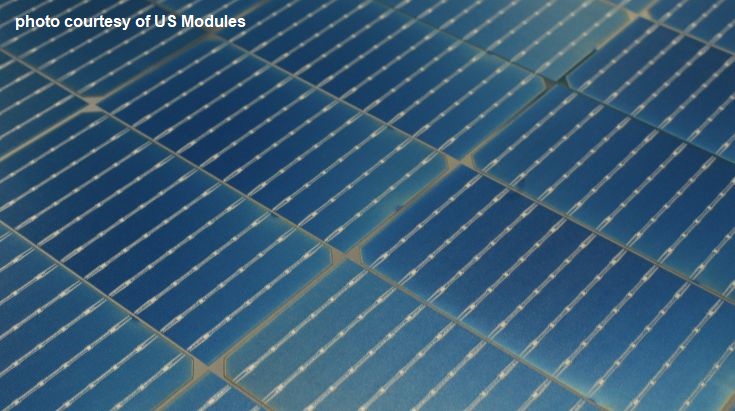
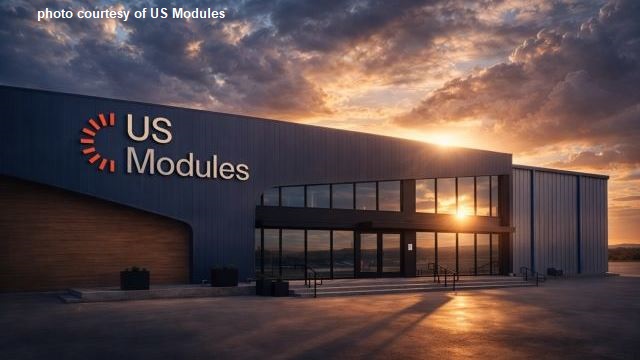
West of Easterwood Airport, production is about to begin on solar panels used in solar energy farms around the state.
Charles Carey is the CEO of the parent corporation that owns U.S. Modules, where during the last year and a half has been spent building the 150,000 square foot complex north of FM 60 off Jones Road.
Carey says they project to build 2.2 million panels in 2027. He says that is equivalent to powering 160,000 homes.
The panels will be used by a sister company that Carey says is building solar energy farms in north, west, and the panhandle areas of Texas.
Employment at U.S. Modules is projected to reach 250 by the end of this year, with continued expansion planned as new production lines are added.
Carey says a reason for locating here was the ability to recruit engineering graduates at Texas A&M.
Click below to hear Charles Carey’s visit with WTAW’s Bill Oliver.
Listen to “Production of solar panels in College Station is starting soon” on Spreaker.
News release from U.S. Modules:
A new solar manufacturing facility in College Station will bring its first production line online March 25, launching a Texas-based operation designed to expand domestic solar module production.
Texas has rapidly become one of the largest solar power producers in the United States, creating growing demand for domestic solar manufacturing. This facility, operated by U.S. Modules, marks the start of a veteran-led manufacturing effort focused on strengthening U.S. energy infrastructure.
The site is designed to scale to approximately 1.4 gigawatts of annual production capacity, creating roughly 250 jobs in the region as operations expand and positioning the facility as a growing contributor to domestic solar manufacturing.
Production Line 1 is designed for approximately 400 megawatts of annual capacity, with the site built to scale to roughly 1.4 gigawatts of annual production as additional lines come online. The 150,000-square-foot facility includes two solar module production lines along with warehouse and loading infrastructure to support utility-scale deployment.